
Lawrence County Court Record Requests
Start with the basics: court name, case number, caption, document type, and a rough date. The Clerk of Courts holds Common Pleas records. Its eServices eAccess locator is the online place to start. Other courts keep their own files. Lawrence County Municipal Court, Ironton Municipal Court, Probate, Juvenile, and a mayor's court all do. Going straight to the right office beats any broad county docket search.
- Use the appropriate portal to locate the court and case information, if available.
- Ask for a docket history, named filed document, plain copy, or certified copy, because these are different products.
- Call or visit the correct clerk or court with the case number and date range.
- For a mail request, confirm the court's payment and return-postage requirements before sending it.
- Ask whether the file is current, stored, sealed, restricted, or subject to redaction review.
Phone numbers help. Common Pleas Legal is (740) 533-4355. County Municipal is (740) 867-3127, Ironton is (740) 532-3062, Probate is (740) 533-4343, and Juvenile is (740) 533-4372. Even with online access, the telephone, the counter, and the written request all remain solid ways to reach a court docket or file.
Lawrence County Portal Limits
The clerk's eServices site calls its public case information computerized records kept by the Clerk. It also disclaims any warranty on accuracy, reliability, or suitability. Municipal CaseLook notices go further. They warn of at least a 24-hour posting delay. They also tell anyone who needs verified information to go to the court. So a portal is a fine tool for finding a case. It helps you make a precise request too. But it is not a certificate.
That gap matters when a filing is fresh. It matters when a record is missing online, or an official copy is required. Ask the record keeper for the document, the copy type, and the date. A web printout is never the court's final word on its own docket.
Kinds of Court Records
Three local products get mixed up constantly. A docket, or case history, is a chronological locator. A filed case document is the real item: the complaint, motion, order, judgment, exhibit, or other paper in the file. A certified, authenticated, or exemplified copy is something different again, prepared by the record keeper under its own local procedure.
- Docket histories showing filings, settings, entries, status, and some financial or disposition fields.
- Filed complaints, motions, orders, judgments, and exhibits when public access is permitted.
- Plain paper copies from the court or clerk.
- Certified, authenticated, or exemplified copies prepared by the court.
- Hearing transcripts, which have a separate court-reporter ordering route.
Lawrence County Docket Document Copy
The docket tells you what happened, in order. The filed paper sits behind each entry. A certified copy is the clerk's or court's official version. No online record can certify itself, even one showing a disposition or a docket entry.
| Record | Local use | Best channel |
|---|---|---|
| Docket history | Find filings, settings, entries, and status. | eServices, CaseLook, Probate or Juvenile, or Coal Grove search. |
| Filed document | Obtain the actual public paper in the case file. | Correct court counter or focused written request. |
| Certified copy | Request an official court-prepared copy. | Court or clerk with its payment and mailing rules. |
Court Records: What They Contain
The public municipal layout can carry a case number, a docket-entries link, filing or charge information, hearing date and type, status and status date, costs, fine, balance, payment fields, disposition date, plea or finding, and judgment text. That is a lot. Still, a docket is a case history, not a full stand-in for every filed document in the court record.
| Case number | The court-assigned identifier needed by the clerk and portal. |
|---|---|
| Docket entries | Chronological filings, settings, orders, and other actions. |
| Status | A system label that should be read with its date. |
| Hearing fields | Date, time, and type when the court displays them. |
| Disposition fields | Plea, finding, judgment, or another outcome field. |
Lawrence County Probate Retrieval
Probate has the clearest local copy rule. Current open public files may be examined in the office. A closed file in storage can take up to ten court days to retrieve. No file leaves the office, period. Build that timing into any visit or written request.
Probate Local Rule 55.1 adds two more requirements: advance payment, and at least one court day for certified, authenticated, or exemplified requests. A mailed request needs a self-addressed stamped envelope. Remember, these are Probate rules alone, not a rule binding every Lawrence County court.
Copy Fees and Certification
Copy fees depend on the record keeper. Probate charges 10 cents per page for plain copies. Ironton Municipal Court's current schedule lists certified copies at $3 per page. It also lists a triple-seal certification at $25. Lawrence County Municipal Court publishes 25 cents for a plain copy. It charges $2 for a certified copy. For Common Pleas costs, the clerk-hosted fee PDF is the authority. Ask the clerk for the current price before you rely on a number.
| Court or item | Published amount | Scope |
|---|---|---|
| Probate plain copy | 10 cents per page | Probate Local Rule 55.1. |
| Probate certification | Confirm payment | At least one court day, advance payment, and mail envelope if mailed. |
| Ironton certified copy | $3 per page | Ironton Municipal Court only. |
| County Municipal plain and certified | 25 cents / $2 | Published by that municipal court. |
| Common Pleas copy fee | Confirm with clerk | Do not transfer municipal fees to Common Pleas. |
Lawrence County Clerk Legal Records
The Lawrence County Clerk of Courts keeps Common Pleas legal records. For any Common Pleas docket or copy question, call the Legal Department. The direct line is (740) 533-4355. The office sits at 111 S. 4th Street, Ironton. The county directory lists clerk hours of 8:00 a.m. to 4:00 p.m.
Lawrence County Clerk of Courts
Common Pleas legal records and Clerk eServices public-case information.
Legal Department: (740) 533-4355
Local Rule 3 covers the clerk's duties. Papers delivered in an action are preserved, made available during court hours or as otherwise necessary, and copied on request after the usual fee. Files do not leave the office except as authorized.
Lawrence County Court Fee Authority
Use the Common Pleas Court Fees PDF for current Common Pleas costs. Do not rely on an Ironton or County Municipal figure. The clerk's own list covers filing figures for specific case types. Confirm any routine ordinary-copy or certification amount with the Legal Department before submitting a request.
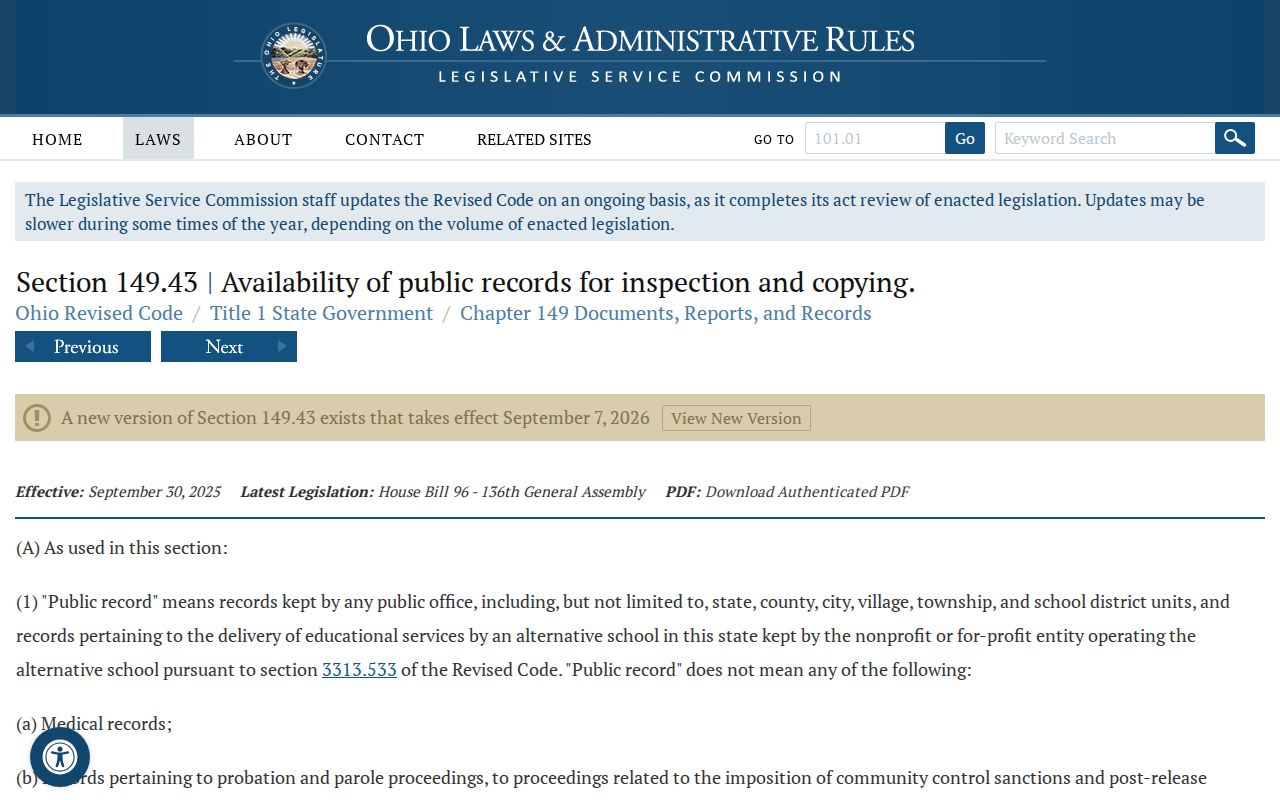
View the Ohio Public Records Act source, which sets out R.C. 149.43. That statute addresses public-office records. Court files still answer mainly to the court-record access rules. The local keeper's procedures govern them too.
Use a court-specific request for any court file, then confirm the fee and access method with that court.
Access Rules for Court Records
Ohio Rules of Superintendence 11.09 through 11.17 supply the current court-record framework. Rules 11.10 through 11.14 handle omitted identifiers and restricted access. R.C. 2953.32 covers eligible sealing or expungement applications and their exceptions. R.C. 2151.14 shields juvenile-probation reports and records. It shields them except through stated access or court-order paths.
Access limit: Lawrence Probate Local Rules 55.1 and 55.2 make public files available for examination and copying while excluding records confidential by law or court order. A redacted or missing portal result can therefore be lawful and should be addressed with the court, not by assumption.
Lawrence County Restricted Documents
Some Lawrence County court records sit behind a wall. Some records stay out of ordinary online docket search. Sealed files and juvenile matters are two examples. Adoption papers, abuse or neglect cases, health records, financial records, and properly redacted material sit there too. A docket search that returns nothing does not mean no case exists. Check the jurisdiction first. Then ask the court itself how access works for that record type.
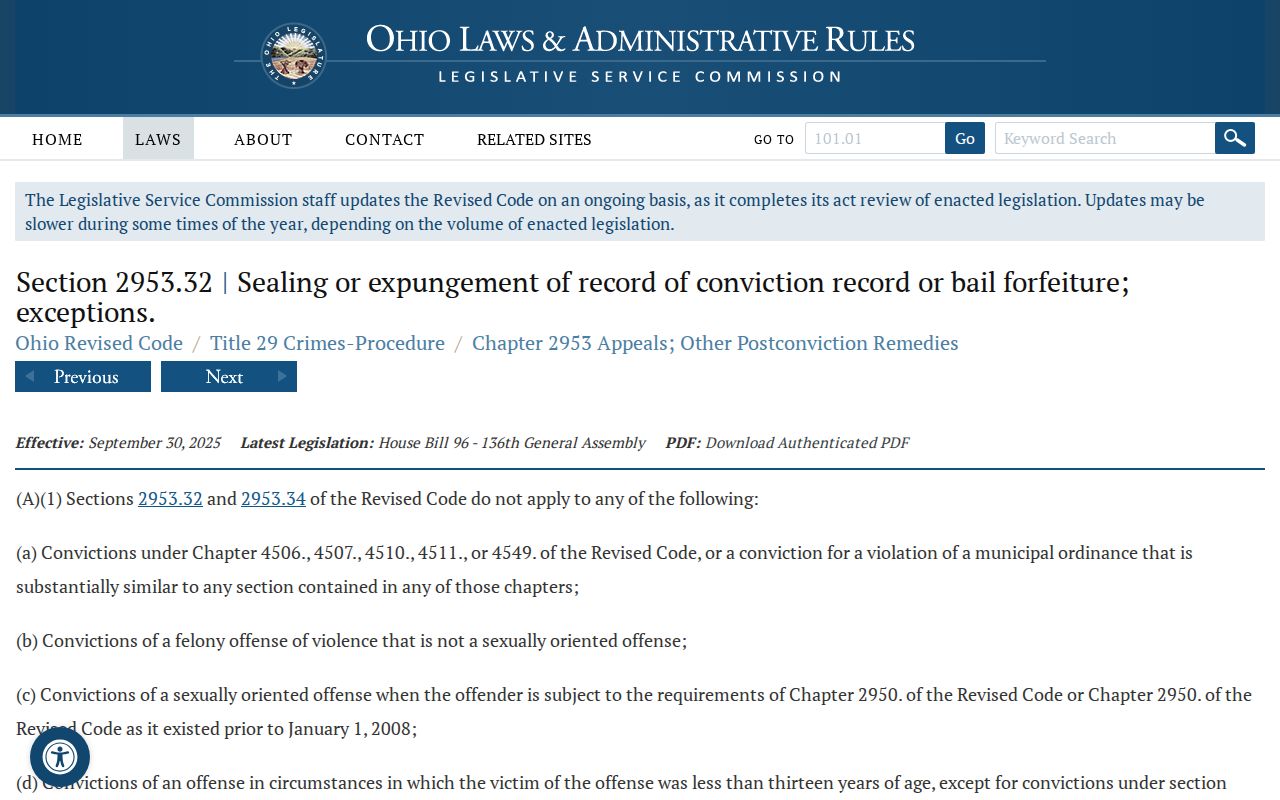
The official sealing and expungement statute sets the boundary these rules follow. It marks what stays closed, not whether any one record will open for you. Review R.C. 2953.32.
Want a restricted Lawrence County document? The court or clerk can walk you through the procedure. But confidential material will not be handed over just because someone asks for it.
Lawrence County Transcript Requests
A transcript is its own animal. It is not a docket entry. And it is not the image of a filing you pull from a clerk portal. To order one, name the judge, the hearing, and the date, then ask the court how its court reporter takes transcript requests. Lawrence County publishes no official transcript fee, so the court and the specific proceeding are where any request should begin.
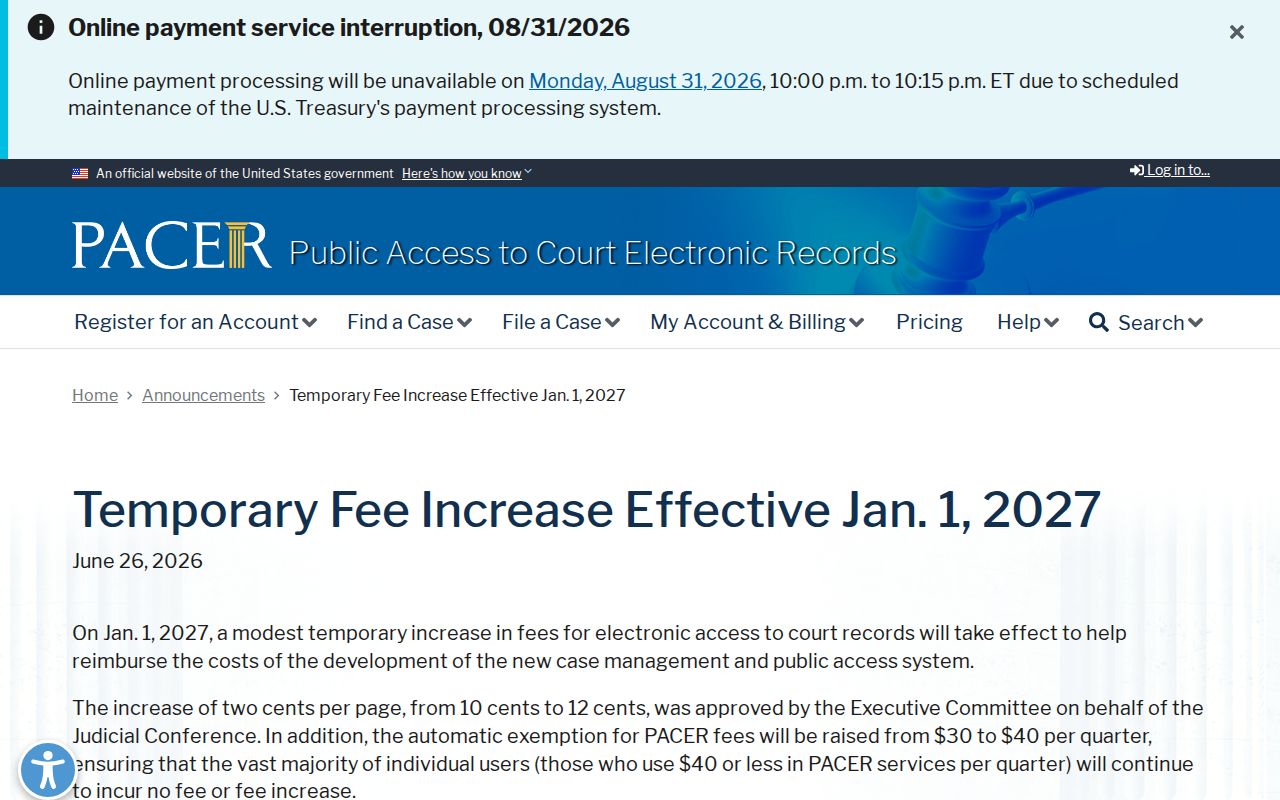
Federal PACER files are a different stream entirely. They never live with the Lawrence County clerk. The PACER announcement covers a federal fee change and marks that boundary plainly: federal cases go through the federal court channel. The Lawrence County clerk keeps only county records.
Keep the court and record type aligned so the request reaches the correct custodian.